
Fake websites are no longer the clumsy, typo-ridden pages they used to be. Today's scam sites run pixel-perfect copies of real brands, carry valid security certificates, buy ads on the same platforms you scroll every day, and disappear before complaints catch up with them. The FBI logged more than 12.5 billion dollars in reported online fraud losses in a single recent year, and a single investigated network was found running over 8,000 fake storefronts at once. The people behind these sites are organized, fast, and very good at looking legitimate.

The good news: they are not good at hiding. Our team regularly dissects scam sites that have taken real money from real shoppers, and the same weaknesses show up every time. Fake websites are rarely exposed by one dramatic giveaway. They leak through five or six small details at once, and every one of those details takes under a minute to verify. This guide covers the eight checks we apply to every site we investigate, backed by documented cases where shoppers lost money and a breakdown of exactly what should have tipped them off.
The 8 checks at a glance
| Check | What it catches | Time needed |
| 1. Read the domain letter by letter | Lookalike and copycat addresses | 20 seconds |
| 2. Ignore the padlock as proof | False sense of security from HTTPS | Instant |
| 3. Look up the domain age | Sites registered days before targeting you | 1 minute |
| 4. Question impossible prices and timers | Fake clearance sales and pressure tactics | 30 seconds |
| 5. Verify the company behind the site | Missing or stolen business identities | 2 minutes |
| 6. Audit the boring pages | Copied policies, broken links, stolen photos | 2 minutes |
| 7. Study the payment options | Untraceable payment demands | 30 seconds |
| 8. Run it through free checkers | Sites already reported by other victims | 1 minute |
Read the domain name letter by letter
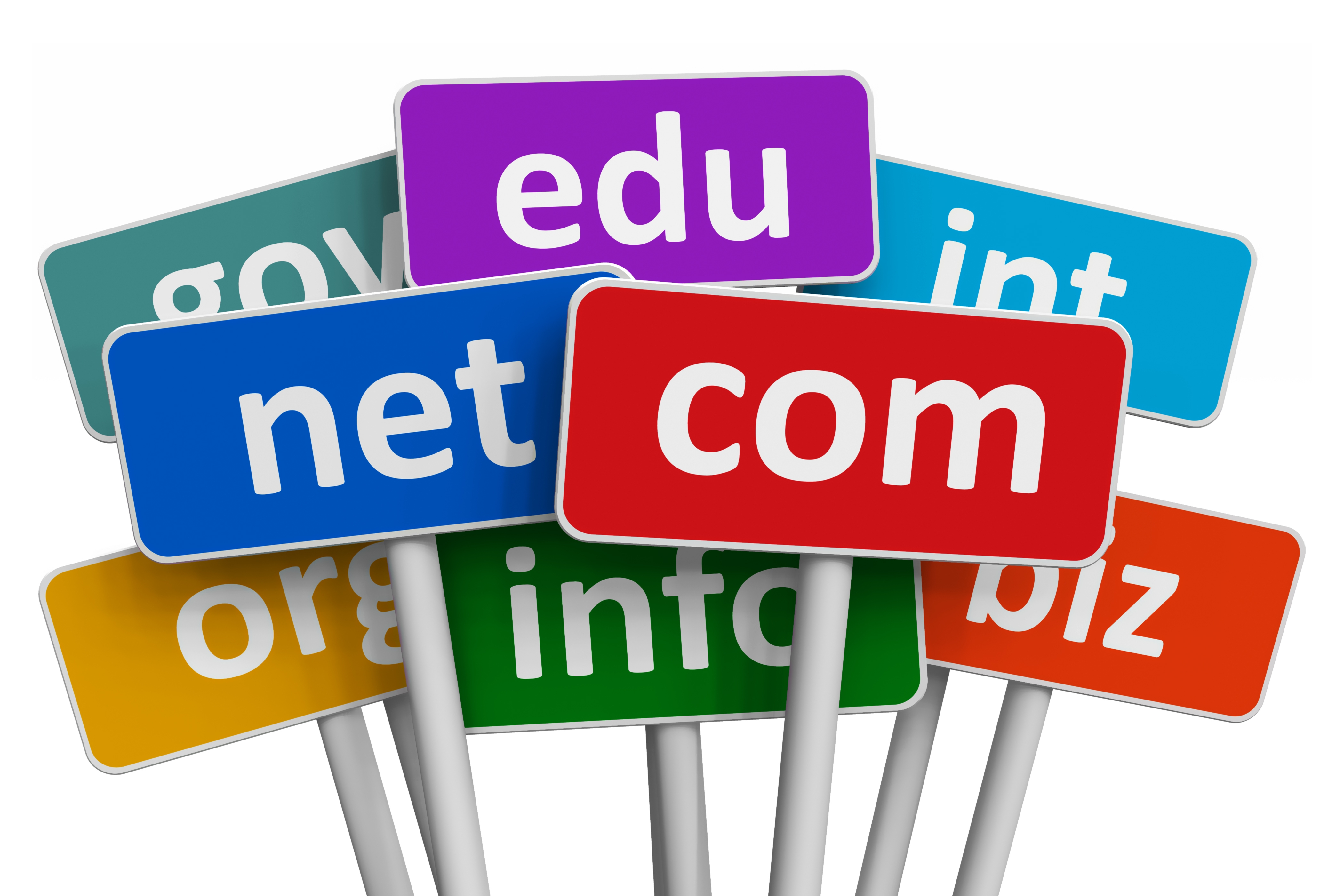
The address bar is where most fakes fall apart, yet it is the thing people check least carefully. Scammers register domains built to pass a quick glance: swapped characters, added words, or a legitimate brand name parked on the wrong domain ending.
Domain tricks that fool people daily
- Character swaps:
arnazon.cominstead ofamazon.com, where "rn" mimics "m" at small font sizes. - Added words:
wilko-clearance-sale.comwhen the real site is simplywilko.com. Brands almost never bolt promotional words onto their main domain. - Wrong endings: a brand you know on
.shop,.top,.sbs, or.livewhen its real home is.com. One documented postal scam hosted its payment page on a.sbsdomain while displaying official logos everywhere. - Subdomain disguises:
paypal.com.secure-login.xyzis not PayPal. The real owner is whatever sits directly before the final dot pair, in this casesecure-login.xyz.
The reliable habit: when money or a password is involved, never arrive through a link in a text, email, or social media ad. Type the address yourself or use a bookmark you saved earlier. It feels tedious exactly once, then it becomes muscle memory.
Stop treating the padlock as a safety badge
For years, consumers were taught that the padlock icon means a site is trustworthy. That advice is now actively dangerous. The padlock only confirms that your connection to the site is encrypted. It says nothing about who runs the site. Certificate authorities hand out basic SSL certificates for free in minutes, and scammers use them precisely because people still equate the padlock with legitimacy.
| What the padlock means | What it does not mean |
| Data travels encrypted between you and the server | The site owner is honest |
| Nobody on your network can read what you type | The business actually exists |
| The certificate matches the domain shown | Your payment will buy a real product |
Put bluntly: a scammer with HTTPS simply steals your card number over a secure connection. Treat a missing padlock as an instant dealbreaker, but never treat its presence as a green light.
Check how old the domain is
This is the single most underused check, and it has caught more fakes in our testing than anything else. Legitimate retailers have domains that are years or decades old. Scam storefronts are typically registered days or weeks before they start advertising, because platforms and blocklists shut them down quickly and the operators simply spin up new ones.
How to run a 60-second domain age check
1. Copy only the domain from the address bar, for example examplestore.com, without anything after the first slash.
2. Paste it into a WHOIS lookup such as lookup.icann.org or who.is.
3. Find the "creation date" or "registered on" field.
4. Apply the rule: a "major brand outlet" on a domain created last month is a scam until proven otherwise.
Two more details worth a glance in the same report. Heavy privacy proxying combined with a registrar known for cheap bulk registrations is not proof of fraud on its own, but stacked on top of a three-week-old domain selling discounted designer goods, it completes a very familiar picture.
Question prices and countdowns that make no sense
Every documented fake-store wave shares one engine: a discount too deep for a real business to survive. When UK homeware chain Wilko collapsed in 2023, fake sites advertised its stock at up to 90 percent off within days. Real liquidations rarely look like that, and the genuine company was not even selling online anymore. The discount was not a deal, it was bait calibrated to switch off skepticism.
Pressure patterns to watch for
- Sitewide 70 to 90 percent discounts on brand-name goods, especially framed as "closing down," "warehouse clearance," or "factory flash sale."
- Countdown timers that reset when you refresh the page. Reload once and watch what happens.
- Fake scarcity such as "only 2 left" on every single product in the catalog.
- Inflated original prices, where the "was" price never existed so the "now" price looks heroic. Price history tools like CamelCamelCamel for Amazon listings expose this in seconds.
A useful mental reframe: scammers do not price products, they price your hesitation. The number is set at whatever makes you click "buy" before you start checking anything else on this list.
Verify the company actually exists
Real businesses are legally required in most countries to publish who they are. In the UK, for instance, online sellers must list a contact address. Fake sites either omit this entirely, publish a free webmail address as their only contact, or list a real address that belongs to someone else. Leicester trading standards officers investigating scam complaints in one holiday season found "business addresses" that turned out to be ordinary houses whose owners had no idea their address was being used, and some of the fake companies had even registered with Companies House to look more convincing.
| Trust signal | Legit site | Fake site |
| Contact page | Street address, phone, business email on the company's own domain | Web form only, or a Gmail or Outlook address |
| Phone number | Rings through to a real person or proper voicemail | Missing, disconnected, or never answered |
| Address | Matches a real commercial premises on Street View | Residential house, vacant lot, or copied from another firm |
| Company registration | Verifiable, with a trading history | Absent, or freshly registered purely as window dressing |
Drop the listed address into a map and look at the building. Call the phone number before ordering, not after something goes wrong. If a store sells nationwide but cannot be reached by any human channel, walk away.
Audit the pages nobody bothers to fake well
Scam operations are built fast and in bulk. One threat intelligence investigation by EclecticIQ ahead of a recent holiday season mapped a single network of at least 8,000 fabricated storefronts impersonating brands like IKEA, Wayfair, and The North Face, complete with fake "Trusted Store" badges. At that scale, nobody is lovingly writing a returns policy for each site. The boring pages are where the corner-cutting shows.
A five-minute page audit
· Returns and shipping policies: search a distinctive sentence from the policy in quotes. If the identical text appears on twenty unrelated stores, you are looking at a template farm.
· About page: vague founder stories with no names, no dates, and no verifiable history are a classic filler pattern.
· Product photos: right-click and run a reverse image search. Stolen manufacturer photos mixed with watermarks from other shops is a giveaway.
· Dead ends: click the footer links. On fake sites, social media icons often link to nothing, the homepage, or someone else's accounts.
· Language quality: occasional typos happen everywhere, but garbled product descriptions and mistranslated buttons across the whole site signal a bulk-built operation.
Study how they want you to pay
Payment methods are a confession. Legitimate retailers want the methods customers trust: credit cards and established processors with dispute systems. Scammers want the opposite, money that cannot be clawed back. Several victims of the fake Wilko stores later discovered their payments had been routed to a completely unrelated website name on their card statements, a routing trick common across large scam networks.
| Payment request | Verdict | Why |
| Credit card via a recognized checkout | ACCEPTABLE | Chargeback rights protect you if goods never arrive |
| PayPal "goods and services" | ACCEPTABLE | Buyer protection applies to eligible purchases |
| Bank transfer to an individual | RED FLAG | Nearly impossible to reverse once sent |
| Gift cards or prepaid vouchers | RED FLAG | No real business accepts gift cards as payment |
| Crypto only | RED FLAG | Irreversible and anonymous by design |
| Card checkout on an unrelated domain | RED FLAG | Your details are leaving the site you think you are on |
One more tell: watch the checkout URL. If a store's payment page suddenly jumps to a domain that shares nothing with the store name, stop before entering card details.
Run the site through free reputation tools
You are almost never the first potential victim. By the time a scam site reaches you through an ad or a text, earlier targets have usually already reported it. A few free lookups surface that history instantly.
Tools worth bookmarking
- Google Safe Browsing status page: shows whether Google has flagged the URL for phishing or malware.
- ScamAdviser: aggregates domain age, hosting data, and user reports into a risk score. Treat the score as a signal, not a verdict.
- Trustpilot and independent reviews: search the exact domain, not just the brand name, since fakes piggyback on real brands' reputations. Sort by newest and read the one-star reviews first.
- A plain web search: type the domain plus the word "scam." Victim complaints on forums and consumer sites usually appear within days of a scam launching.
- Your bank's app: many banks now warn about known fraudulent merchants at the point of payment. Do not dismiss that warning to chase a bargain.
No single tool is perfect, and brand-new scam domains can briefly score clean everywhere. That is exactly why this is check number eight and not check number one. The tools confirm suspicion, the earlier checks create it.
Real fake websites, and what actually flagged them
Theory is easy. Here are three documented cases where ordinary shoppers lost real money, matched against the warning signs that were sitting in plain sight.
Case 1: The fake Wilko clearance stores
UK, 2023

After the 400-store homeware chain Wilko collapsed in August 2023, at least ten copycat websites appeared offering its products at huge discounts. Administrators at PwC confirmed the sites were fraudulent and that the only genuine domain was wilko.com. South Yorkshire Police alone logged 19 victim reports across two months, with individual losses reaching about 200 pounds. One analyzed site, wilkoclosing.com, even sent fake order confirmations and fake tracking numbers, and victims found their payments had gone to an unrelated merchant name entirely.
What flagged it
· Discounts up to 90 percent, framed as a "store closing" clearance.
· Brand name with extra words bolted onto freshly registered domains.
· The real company had publicly stopped selling online, making any Wilko web store impossible by definition.
· Card payments routed to a mismatched, unrelated merchant name.
· Spread through Facebook ads and posts rather than any official channel.
Case 2: The fake USPS redelivery pages
USA, ongoing
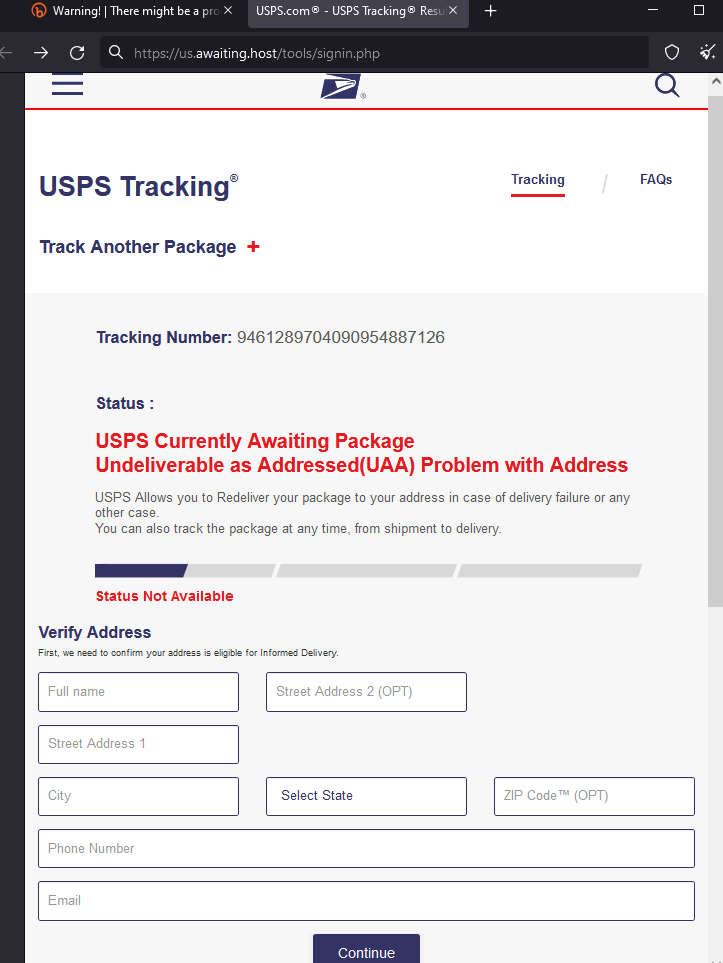
This is the scam that nearly caught our own research team. A text claims a package could not be delivered and links to a pixel-perfect copy of a postal tracking page, which asks you to confirm your address and pay a tiny redelivery fee, typically between two and five dollars. The fee is a decoy. The real prize is the full card number, billing address, and personal details entered along the way. USPS has stated it does not send unsolicited texts with links and does not charge for tracking services. One documented variant hosted its convincing lookalike page on a random .sbs domain.
What flagged it
· Unsolicited text message containing a link, which USPS says it never sends.
· Domain with no relation to usps.com, often on obscure endings like .sbs or .live.
· A payment demand for a service the real carrier provides free.
· Urgency framing and countdown pressure to act within hours.
· Tracking numbers that fail when pasted into the carrier's real site.
Case 3: The 8,000-site holiday storefront network
Global, holiday seasons

Researchers at threat intelligence firm EclecticIQ identified a network of at least 8,000 fabricated shopping sites impersonating major brands including IKEA, Wayfair, and The North Face, timed around Black Friday. The sites used authentic-looking URLs, copied branding, and fake "Trusted Store" badges, and were pushed through paid social media ads. Brands confirmed the sites were not theirs, and fraud analysts noted most of these sites live only briefly before being replaced, which is why reputation scores sometimes lag behind.
What flagged it
· Steep brand-name "deals" advertised through social ads instead of official channels.
· Trust badges that were static images, not clickable verifications.
· Domains mimicking brand names without being the brands' real addresses.
· Very short domain lifespans, exposed instantly by a WHOIS creation-date check.
Already paid a suspicious site? Do this now
1. Contact your bank or card issuer immediately and request a chargeback or dispute. Speed matters, and victims in the Wilko cases who acted fast did recover money through their banks.
2. Change any password you entered on the site, plus anywhere else you reuse it.
3. Watch your statements for small test charges over the following weeks, since stolen cards are often probed with tiny amounts first.
4. Report the site to the FTC at reportfraud.ftc.gov in the US, Action Fraud in the UK, or your national equivalent, and flag the URL to Google Safe Browsing so others get warned.
5. Keep the evidence: screenshots, confirmation emails, and the exact URL all strengthen a dispute.
Final verdict
After months of taking these sites apart, reading victim threads, and testing every check in this guide against live scams, our honest takeaway is this: we have never found a scam site that survived more than three of the eight checks above. Not one. The fakes that looked flawless at first glance always cracked at the WHOIS lookup, the payment page, or the contact details. The craft goes into the storefront, never into the plumbing.
Our advice is simple: stop trying to feel whether a site is trustworthy, because feelings are exactly what these pages are engineered to manipulate. Check the domain character by character, look up its age, and glance at how they want to be paid. Three checks, maybe ninety seconds. That small ritual has already stopped people close to our team from paying fake clearance stores, and it would have saved our own researcher from a $2.70 redelivery fee that was never about $2.70. Slow down for ninety seconds. The deal that cannot wait that long was never a deal.