
Every November, our team does the same thing before recommending a single deal: we trace the loudest Black Friday ads on social media back to the stores behind them. Last season, several of those ads ended at websites that did not exist a month earlier, including one near perfect clone of a Dyson outlet selling a cordless vacuum at 70% off. The giveaway was not the design, which looked right down to the returns page. It was the domain record, registered eleven days before the ad went live. Black Friday scam sites work because they catch shoppers in that five second window where a countdown timer is ticking and the brain stops asking questions. This guide covers the checks our team runs before trusting any store, the red flags that matter most, and real fake sites that took money from real people.

| Quick answer: Before paying on any unfamiliar sale site, check three things: the domain age (anything registered in the last few months is a serious warning), a working phone number and physical address, and reviews found outside the site itself. If any of the three fails, walk away. No discount is worth a drained card. |
Why Fake Stores Flood the Internet Every November
Scammers follow shopper traffic, and November is the biggest traffic spike of the year. Check Point researchers tracking the 2024 season found that new websites tied to Black Friday themes surged 89% compared to 2023 in the two weeks before the event, and more than tripled against 2022. Most are registered days before the sales start, loaded with stolen product photos, and promoted through paid social ads so they appear above legitimate results.

The money involved is not small. These are the latest verified figures from official bodies:
| $16.6BTotal losses reported to the FBI's IC3 in 2024, up 33% year on year | 387,000+Online shopping fraud reports filed with the FTC in 2024 |
| $434.4MReported US losses to online shopping fraud in 2024 | $130Median loss per victim, which is why most people never report it |
The pattern is global. Australia's National Anti-Scam Centre recorded $259.5 million in scam losses in just the first nine months of 2025, with shopping scams the single most common category involving financial loss, up 19% from the year before. Nearly half of all those losses traced back to fake websites, online ads, and social media pages. The ACCC issued its Black Friday warning for exactly that reason: scammers love the sales as much as shoppers do.
Real Black Friday Scam Sites That Caught Real Shoppers
These are not hypotheticals. Each case below was documented by police, security researchers, or the companies being impersonated. Domains are written with brackets so nobody clicks them by accident.
Case 1 · UK, 2023 The Fake Wilko Clearance Sites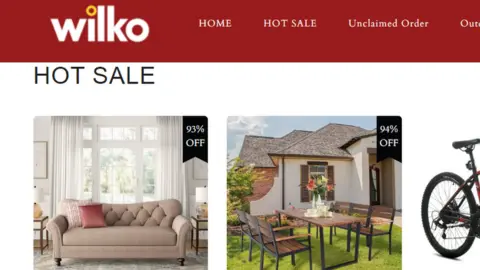 When UK retailer Wilko collapsed in August 2023, fraudsters launched at least ten copycat websites claiming to sell off warehouse stock at up to 90% off, according to reporting covered by Retail Gazette. The giveaway detail in hindsight: one site advertised a £4.99 sofa, and Wilko never sold sofas. Shoppers on Facebook reported spending around £100 on orders that never arrived, complete with fake confirmation emails. South Yorkshire Police alone logged 19 victim reports in August and September, with individual losses reaching £200. Administrators at PwC had to publicly confirm that wilko.com was the only genuine address. Why it worked: a real, well known brand in the news, plus clearance urgency. People expected fire sale prices, so 90% off felt believable. |
Case 2 · Global, 2024 The $250 Rolex and 90% Off Louis Vuitton Campaign Ahead of Black Friday 2024, Check Point documented a wave of fake luxury stores pushed through spam emails. One domain, hotwatch[.]su, blasted subject lines offering Rolex watches starting at $250. Another, 85off-lvbags[.]com, promised Louis Vuitton bags at up to 90% off. The sites reused the same banner templates, some containing grammatical errors, and were part of the 89% spike in new Black Friday domains that season. Buyers received counterfeits at best, and in many cases nothing at all, while their card details went straight to the operators. Why it worked: luxury brands rarely discount, so scammers invent the Black Friday exception shoppers wish existed. |
Case 3 · US, 2023 to 2024 nestorliquor[.]com and the Fake North Face AdsTrend Micro's scam tracking team flagged nestorliquor[.]com, a fake online liquor shop, during a 2023 holiday sweep in which they detected and blocked 34,896 scam URLs from October 1 onward, nearly 10% more than the previous year. In 2024, the same team documented fraudulent Facebook and Instagram ads impersonating The North Face with Black Friday deals of up to 80% off. The ads routed shoppers to spoofed storefronts that mimicked the real brand site closely enough to pass a casual glance. Why it worked: the scam arrived through the ad feed, not search, so victims never typed an address or saw search warnings. |
How Scam Sites Hook You: The Playbook
After reading through dozens of these cases, the same five moves appear again and again. Knowing the playbook makes the traps much easier to spot in the moment.
| Tactic | What it looks like | Why it works on you |
| Impossible discount | 70% to 90% off premium brands like Dyson, UGG, or Louis Vuitton | Black Friday normalises big numbers, so your price scepticism is already lowered |
| Countdown pressure | Timers, "only 3 left" banners, flashing stock warnings | Urgency shuts down the slow checks that would expose the site |
| Social media ads | Sponsored posts on Facebook, Instagram, and TikTok with stolen brand imagery | An ad feels vetted by the platform, even though ad screening misses plenty |
| Lookalike domains | Brand name plus words like "sale", "outlet", "clearance", or a swapped letter | On a phone screen, a long URL gets truncated and the difference disappears |
| Fake trust signals | Padlock icon, copied trust badges, walls of five star reviews on the site itself | HTTPS only means the connection is encrypted, not that the owner is honest |
Red Flags That Give a Black Friday Scam Site Away
None of these alone is absolute proof, but two or more together should end the purchase. South Yorkshire Police, the FTC, and the ACCC all point to the same cluster of warning signs.

| Domain registered recentlyScam sites typically live for a few weeks. A store "established 2009" on a three week old domain is lying. | No phone number or addressOnly a contact form or a Gmail address. Legitimate retailers publish real contact routes. |
| Prices far below everyone elseIf one store undercuts every competitor by 60%, the product does not exist. | Bank transfer, gift cards, or cryptoAny store steering you away from card payment is removing your refund rights on purpose. |
| Copied or broken EnglishOdd phrasing like "goods piled up in warehouse, super low price", a line lifted from real Wilko scam ads. | Reviews only on the site itselfHundreds of five star reviews on-site, zero footprint on Trustpilot or Google. |
| Vague or missing policiesNo returns page, or one copied word for word from another store, typos included. | Checkout asks for too muchDate of birth or ID details for a pair of trainers means data harvesting, not shipping. |
The 60 Second Check Before You Pay
This is the exact routine our editors run on any store they have not covered before. It genuinely takes about a minute, and it has disqualified more than a few "deals" from our roundups over the past two seasons.
| 1 | Look up the domain age. Search "whois lookup", paste the address, and check the registration date. Registered within the last six months? Close the tab. The Wilko fakes, the hotwatch[.]su campaign, every case above involved brand new domains. |
| 2 | Read the URL character by character. Check for swapped letters, extra words, and odd endings like .shop, .top, or .su. Then type the brand's real address into a new tab yourself instead of trusting the ad link. |
| 3 | Search the store name plus "scam" or "reviews". Do it off-site. Victims post warnings fast on Reddit, Trustpilot, and the BBB Scam Tracker. Silence is also an answer: a shop with zero footprint anywhere is brand new, which loops back to step one. |
| 4 | Test the contact details. A real address should appear on a map as a business, not a random house. If a phone number is listed, it should at least ring. Thirty seconds, and most fakes fail here. |
| 5 | Check the payment options at checkout. Credit card and PayPal available? Reasonable sign. Only bank transfer, Zelle, gift cards, or crypto? That is the whole scam in one screenshot. Abandon the cart. |
Pay With the Right Method: Your Safety Net Ranked
Even careful shoppers get fooled, which is why the payment method matters as much as the vetting. The difference between a credit card and a bank transfer is the difference between a refund and a lesson.
| Payment method | Protection level | What happens if it's a scam |
| Credit card | Strong | Chargeback rights for goods not delivered. In the UK, Section 75 adds legal protection on purchases over £100. |
| PayPal (Goods & Services) | Strong | Buyer protection covers non-delivery and items wildly different from the listing. |
| Debit card | Moderate | Dispute schemes exist, but money leaves your account instantly and recovery is slower. |
| Buy now, pay later | Moderate | Dispute processes vary by provider and are generally weaker than card chargebacks. |
| Bank or wire transfer | Almost none | Treated as an authorised payment. Recovery is rare once the money moves. |
| Gift cards or crypto | None | Irreversible by design. No legitimate retailer asks for these. Ever. |
Already Paid a Scam Site? Do This Now
Speed matters more than anything else here. Several of the Wilko victims got refunds because they called their banks quickly, before the fraudsters finished moving the money.
| 1 | Call your card issuer or bank immediately. Report the transaction as fraud, request a chargeback, and ask them to block or reissue the card. This is the single highest value call you will make. |
| 2 | Change reused passwords. If you created an account on the fake site with a password you use elsewhere, change it everywhere, starting with your email. |
| 3 | Report it officially. In the US, file at ReportFraud.ftc.gov and IC3.gov. In the UK, use Action Fraud. In Australia, Scamwatch. Reports get sites taken down and feed warnings that protect the next person. |
| 4 | Screenshot everything first. The site, your order confirmation, the ad that led you there. Scam sites vanish within weeks, and your bank will want evidence. |
| 5 | Watch your statements for 90 days. Card details stolen in November often get tested with small charges in January, once victims have stopped looking. |
Our Verdict After a Decade of Sale Seasons
Here is the honest read from a team that still looks forward to Black Friday every year: the deals are real, but so is the minefield around them, and it gets denser every season. That fake Dyson clone from our ad tracing changed how we vet stores more than any industry report ever did. Nothing was lost, but it was an uncomfortable find, because the site was better built than some legitimate shops we cover.
What we actually recommend is boring, and it works. Keep a shortlist of retailers you already trust and start there. Treat every social media ad as unverified until proven otherwise, since that is where the North Face fakes and the Wilko fakes found their victims. Run the 60 second check on anything new, and pay by credit card without exception. The whole routine costs about five minutes across an entire weekend of shopping, and in return not a cent reaches a fraudster.
The scammers are betting on one thing: that a countdown timer beats your patience. Prove them wrong, and the sale season is genuinely yours.